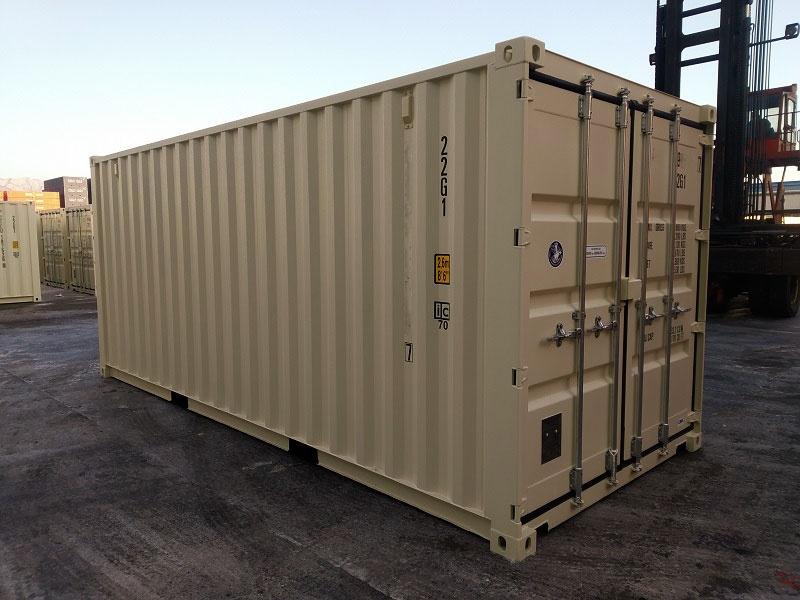
Open Top and Flat Rack Container Dimensions
Choosing between an open-top and flat rack container
Open-top and flat rack containers solve different loading problems. An open-top container retains its side walls and end doors but provides access through the roof. A flat rack has an open structure suited to loads that cannot be contained within conventional side walls or roof space.
Open tops can suit tall cargo or equipment that needs to be loaded from above. Flat racks can suit heavy, wide, tall or irregular loads where side access and securing are more important than enclosed storage.
Do not choose a specialist container based on nominal length alone. Measure the cargo, identify lifting points, consider how it will be secured and confirm the individual container specification before planning transport.
For a broader comparison, see the shipping container sizes guide or review available shipping containers for sale.
20ft Open Top Container Dimensions
The supplied 20ft open top specification gives external dimensions of 20ft by 8ft by 8ft 6in. It also lists internal dimensions and the size of the roof opening. Roof-opening measurements can be especially important where machinery, equipment or other cargo will be lowered into the container from above.
| Description | Imperial | Metric |
|---|---|---|
| Maximum payload | 62,170 lb | 28,200 kg |
| External dimensions | 20' x 8' x 8'6" | 6.096 x 2.438 x 2.591 m |
| Internal length | 19' 4 1/4'' | 5.898 m |
| Internal width | 7' 8 5/8'' | 2.352 m |
| Internal height | 7' 8 1/2'' | 2.348 m |
| Roof opening length | 18' 1/16'' | 5.490 m |
| Roof opening width | 7' 3'' | 2.210 m |
| Gross weight | 67.197 lb | 30480 kg |
| Tare weight | 5.027 lb | 2280 kg |
The supplied imperial gross and tare figures use full stops where commas might normally be expected. Because the source data is inconsistent, confirm the gross weight, tare weight and payload shown for the individual container before using these values for lifting, loading or transport calculations.

Buyers considering this format can review the 20 ft open-top container for sale information.
40ft Open Top Container Dimensions
The supplied 40ft open top specification gives an external size of 40ft by 8ft by 8ft 6in. The listed roof opening is substantially longer than that of the 20ft version, but the actual opening and any roof equipment should still be checked before arranging crane loading.
| Description | Imperial | Metric |
|---|---|---|
| Maximum payload | 58,643 lb | 26,600 kg |
| External dimensions | 40' x 8' x 8'6" | 12.192 x 2.438 x 2.591 m |
| Internal length | 39' 5 3/4'' | 12.032 m |
| Internal width | 7' 8 5/8'' | 2.352 m |
| Internal height | 7' 8 1/2'' | 2.348 m |
| Roof opening length | 38' 8 7/8'' | 11.810 m |
| Roof opening width | 7' 3 7/8'' | 2.232 m |
| Gross weight | 67,197 lb | 30480 kg |
| Tare weight | 8,422 lb | 3820 kg |
A removable roof arrangement can allow top loading, but cargo dimensions, lifting method and securing requirements need to be considered together. Over-height cargo can also affect transport and carrier acceptance.

Further buying information is available on the 40ft open top container for sale page.
20ft Flat Rack Dimensions
The supplied information describes 20ft flat racks as being available with fixed or folding ends and intended for heavy or oversized loads that do not fit within a standard enclosed container.
The original table also includes fields for volume, door openings and internal height to a load line. Those fields resemble standard enclosed-container specifications and may not describe the usable loading envelope of a particular flat rack. They should not be relied on for an oversized load without checking the actual unit's specifications.
| Description | Imperial | Metric |
|---|---|---|
| Maximum payload | 62,391 lb | 28,300 kg |
| Listed dimensions | 20' x 8' x 8'6" | 6.096 x 2.438 x 2.591 m |
| Listed gross weight | 67,197 lb | 30,480 kg |
For flat rack cargo, confirm the usable deck dimensions, end configuration, permitted payload and available securing points for the individual unit. The supplied material mentions lashing rings but does not provide evidence that a stated capacity applies universally, so securing capacity should be verified rather than assumed.

See the 20ft flat rack container for sale page for this size.
40ft Flat Rack Dimensions
The supplied description says the 40ft flat rack can have fixed or folding ends and is intended for loads that do not fit within standard container walls. This can include cargo where the overall width, height or loading method makes an enclosed unit unsuitable.
As with the 20ft table, the source includes generic fields for volume and door openings. These values should not be treated as confirmation of the usable dimensions of a particular flat rack.
| Description | Imperial | Metric |
|---|---|---|
| Maximum payload | 63,640 lb | 28,870 kg |
| Listed dimensions | 40' x 8' x 8'6" | 12.192 x 2.438 x 2.591 m |
| Listed gross weight | 71,650 lb | 32,500 kg |
| Listed tare weight | 8,010 lb | 3,630 kg |
Obtain the unit specification before planning an oversized or heavy movement. Confirm the deck dimensions, end structures, securing points, payload and any restrictions applying to out-of-gauge cargo.

Buyers can also review the 40ft flat rack container for sale information.
Loading and securing specialist cargo
Open tops and flat racks can require lifting equipment because cargo may be loaded from above or positioned directly onto the deck. The lifting plan, lifting points and equipment required depend on the cargo and site.
Heavy or oversized loads also need suitable restraint. Do not assume that every lashing point has the same capacity. The securing arrangement should be based on the actual container, cargo, transport method and requirements applying to the movement.
For an open top, measure both the cargo and roof opening. For a flat rack, check the load footprint and any projection beyond the normal container envelope. Out-of-gauge cargo can affect handling, routing, vessel space and carrier acceptance.
International shipping and CSC checks
An open top or flat rack should not be assumed suitable for international shipping based on its type or nominal dimensions. Confirm the required condition and CSC status for the particular movement, and verify that the carrier accepts the individual container and cargo configuration.
Where the shipper owns the equipment, the Shipper Owned Containers guide explains related container, CSC and VGM considerations.
Shipment planning can also involve verified gross mass, customs documents, insurance and responsibility for delays, storage, detention and demurrage. Refer to GOV.UK, relevant carrier requirements and appropriate professional advisers where necessary.
For maritime safety and verified gross mass requirements, consult relevant International Maritime Organisation guidance.
Planning and longer-term placement
Planning requirements can depend on the proposed use, duration, site status, visibility, neighbouring properties and whether works or a change of use are involved. Listed status, conservation areas and local policy may also affect the position.
Permission is not automatically required in every case, nor should exemption be assumed. Check with the relevant local planning authority where the status of a proposed placement or use is uncertain.
Open Top and Flat Rack Container FAQs
What is the main difference between an open top and a flat rack?
An open-top retains the container's side walls but allows loading through the roof area. A flat rack has a more open structure suited to cargo that cannot fit within conventional walls or roof space.
Can I rely on the dimensions in these tables for an oversized load?
Use them only as reference figures as supplied. Confirm the exact dimensions, payload and configuration of the individual unit before planning an oversized or heavy movement.
Can open-top containers carry over-height cargo?
An open roof can accommodate cargo that extends above the normal internal height, but the resulting load may be out of gauge. Carrier acceptance, handling and transport requirements need to be confirmed.
Are flat racks automatically suitable for international shipping?
No. Confirm the individual unit, CSC status (where required), cargo securing, VGM information, and carrier acceptance before arranging international movement.
What information should I provide for a quote?
When requesting a container quote, provide the required container type and size, cargo dimensions and weight, intended use, delivery location, and any access restrictions.